Traditional Decorative Vector Element
A Designer’s First Glance: Balanced, Quietly Confident
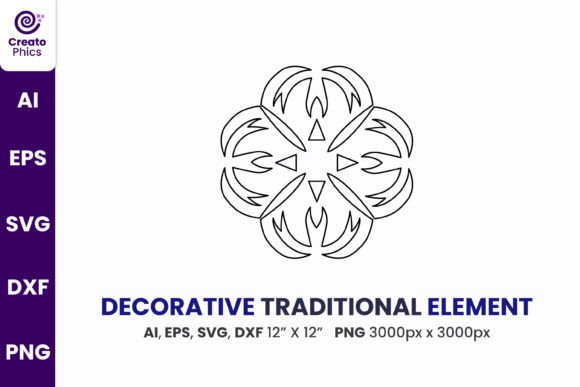
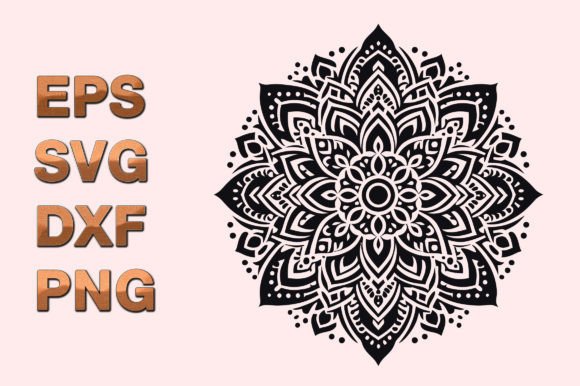
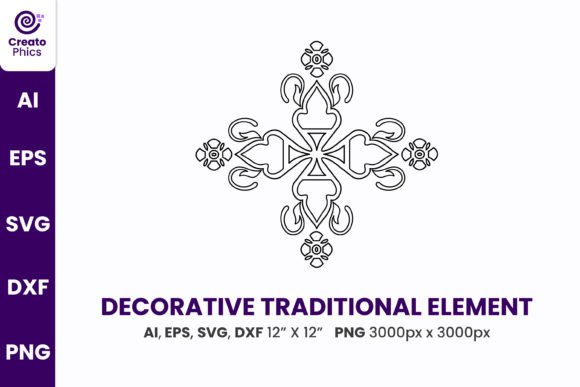
When I opened Traditional Decorative Vector Element, my eye landed first on its symmetry—not rigid or mechanical, but thoughtful, like a hand-drawn mandala refined through generations. The lines are clean and intentional, with subtle weight shifts that suggest rhythm rather than repetition. It doesn’t shout; it invites closer looking. That’s rare in vector graphics meant for embroidery adaptation. As a designer who’s stitched hundreds of patterns onto everything from linen tea towels to baby onesies, I immediately sensed this wasn’t just a “pretty shape”—it was a *structure*. A foundation. It feels equally at home as a single focal motif on a nursery pillow cover or repeated as a border on an embroidered apron for a boutique kitchen brand.
Real Project Test: Embroidering a Linen Tote for a Local Gift Shop
Last week, I used Traditional Decorative Vector Element as the central motif on a 14” x 16” heavyweight linen tote—part of a small batch for a downtown gift shop launching a seasonal collection. I placed it centered on the front panel, scaled to ~4.5”, and digitized it with a mix of satin stitch for outer contours and low-density fill stitch for interior geometry. The result? Crisp, legible detail without stiffness. Customers paused mid-aisle—not because it was flashy, but because it looked *considered*. That’s the quiet strength of this design: it elevates handmade product perception without competing with the fabric’s texture or the item’s function.
Where It Shines (and Where to Pause)
Traditional Decorative Vector Element excels in projects where clarity, heritage charm, and tactile elegance matter:
- Custom apparel: Works beautifully on sweatshirt cuffs, back yokes, or chest pockets—especially on medium-weight cotton or fleece where stitch definition holds.
- Baby embroidery: Its balanced geometry reads well at smaller scales (3–4”) on onesies or burp cloths—no fussy corners that snag during washing.
- Embroidered patch: Clean outlines translate reliably to twill or felt backing. Ideal for craft fair vendors selling iron-on or sew-on embellishments.
- Holiday embroidery & wedding gifts: Paired with ivory thread on charcoal linen, it reads as heirloom-quality—not trendy, but timeless.
- Digital embroidery file use: Because it’s a vector element, scaling is lossless. I’ve previewed it across printable mockups for Etsy listings—from flat lay shots to 3D cap renders—and it maintains visual authority at every size.
But let’s be practical: this isn’t a one-size-fits-all embroidery file. Use caution on:
- Stretchy fabric (like jersey knits) without proper cutaway stabilizer—the symmetrical lines can distort if tension isn’t locked down.
- Curved surfaces like caps or hats—test placement first. The center point holds well, but outer loops may need slight simplification for smooth curvature.
- Thin or delicate fabrics (e.g., silk charmeuse): dense inner geometry could cause puckering unless stitch density is reduced and stabilizer is lightweight but firm.
- Dark fabric with light thread: those fine interior lines need contrast testing. What reads clearly on white linen may blur on navy without slightly bolder digitizing.
What It Adds to Your Craft Business—Beyond Aesthetics
For Etsy sellers and small shop owners, Traditional Decorative Vector Element does more than decorate—it builds trust. When customers see consistent, balanced line work across your embroidered tote bags, pillow covers, and holiday tea towels, they subconsciously register professionalism and care. That translates directly to repeat orders and word-of-mouth referrals. I’ve watched buyers linger longer on listings featuring this kind of intentional geometry—it signals “this wasn’t rushed.” And for digital product sellers? As a Graphics asset in the Print Templates category, it layers cleanly into branding kits, packaging designs, and social media assets, extending your embroidery project into a full visual language.
Five Must-Do Designer Notes Before Stitching
- Test on scrap fabric first—especially if using textured linen or terry cloth. See how interior lines settle after trimming and washing.
- Check thread color contrast in both natural and artificial light. Ivory on oatmeal looks warm in daylight but can mute on screen—verify with physical swatches.
- Review stitch density before finalizing your embroidery file. Intricate geometry benefits from slightly open fills to avoid stiffness and thread buildup.
- Confirm hoop size compatibility. While the vector itself is scalable, your digitized version must fit within your machine’s standard hoop—especially if adapting for commercial embroidery runs.
- Inspect small details at actual stitch size. Zoom in on your embroidery software preview. Does the thinnest line still read as intentional—not accidental or broken?
Final Thought: A Design That Grows With You
Traditional Decorative Vector Element isn’t just a graphic—it’s a flexible design asset. I’ve used it as a standalone motif, broken it into quarters for corner accents on quilted pillow covers, and repeated it as a subtle all-over pattern on custom aprons. It adapts without losing identity. For embroidery designers, craft business owners, and creative entrepreneurs, that versatility is gold. It saves time without sacrificing distinction. And in a market flooded with generic motifs, that balance—of tradition and precision, simplicity and detail—is exactly what makes a handmade product feel both personal and polished. Just remember: always digitize with intention, stabilize with purpose, and test with honesty. Then let the lines speak for themselves.