Decorative Butterfly Graphics for Craft Design Projects
When a client approached me last week about refreshing their handmade stationery brand, I immediately knew the visual direction needed something that balanced delicacy with structure. The brand sells artisanal greeting cards, wax-sealed invitations, and custom notepads through an Etsy shop that has been steadily growing. Their existing visuals felt too safe. They needed a design element that could carry the emotional weight of their brand story without overwhelming the product photography. That is when I started testing the Decorative Butterfly with Stripes asset in my layout files, and what I discovered surprised me in more ways than one.
First Impressions Shape the Entire Creative Direction
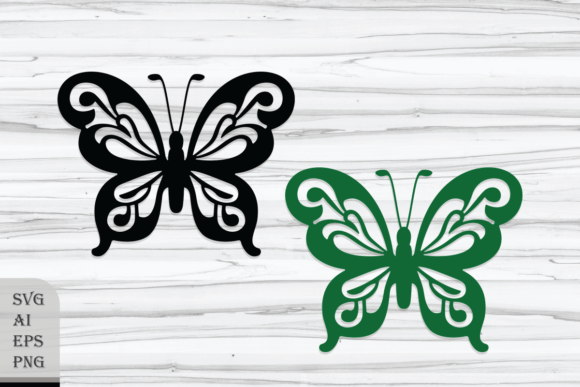
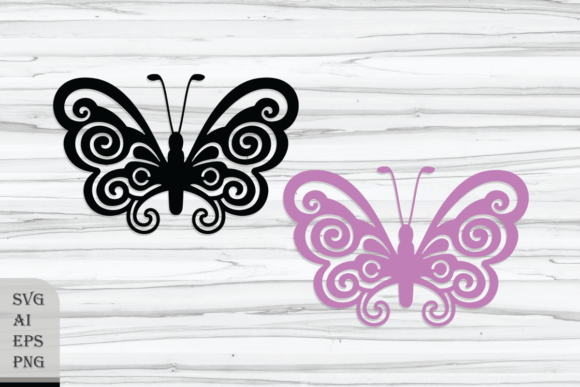
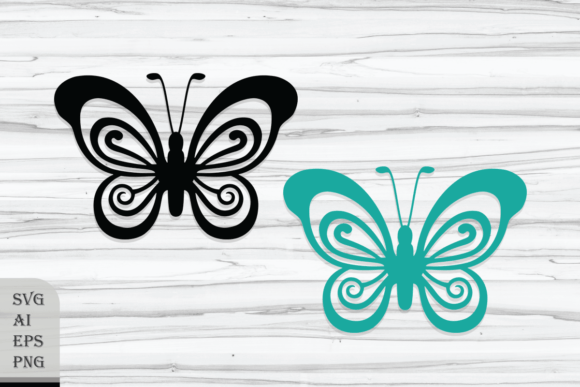
Opening the zip archive, I found two high-resolution PNG files at 4665 by 3185 pixels with transparent backgrounds at 300 DPI, plus matching SVG, AI, and EPS vector formats. The first thing that caught my attention was not just the butterfly silhouette itself. It was the stripe pattern running through the wings. The stripes are not uniform. They undulate, break, and sometimes taper into thin lines that remind me of vintage botanical engravings and modern line art colliding. This is not a flat, generic butterfly clipart. It carries a crafted, almost hand-drawn quality that feels intentional.
The mood it creates sits somewhere between whimsical and editorial. It could easily belong in a high-end stationery collection, a nature-inspired brand identity, or even a chic packaging design for beauty products. The visual weight is medium to bold, meaning it holds its own as a hero graphic but can also be scaled down for decorative accents without losing legibility. For my client project, I placed it next to a serif wordmark and the combination felt refined, feminine, and grounded. That is a rare balance to achieve with a single graphic design asset.
Where This Butterfly Design Truly Performs in Real Client Work
Over the years, I have learned that not every digital product translates well across different mediums. Some SVG design files look stunning on screen but fall apart when printed in small sizes. Others fail to maintain their charm when inverted or placed on dark backgrounds. I tested the Decorative Butterfly with Stripes across several scenarios to see where it shines and where it demands caution.
Large Layout Areas and Hero Graphics
On a standard A4 invitation card, the butterfly scaled up to occupy roughly 40 percent of the top area. The stripe details became more pronounced, and the transparent PNG background allowed me to layer it over a soft watercolor wash without any awkward clipping. The visual impact was immediate. It anchored the entire composition. For packaging design, especially for boutique soap boxes or candle labels, placing this illustration as a central motif on the front panel created an upscale artisan feel. The subtle complexity of the stripes elevates the perception of the product behind it.
Printable Designs and Stationery Collections
The product description mentions stationery as a primary use case, and I fully agree. This asset fits naturally into printable design work. I created a matching set of notecards, envelope liners, and gift tags using the butterfly repeated in different opacities. Because the PNG file is already 300 DPI, I did not have to upscale or worry about pixelation. For Cricut project users and crafters, the SVG and EPS formats are ready to import into design software. The cut lines would need minimal adjustment, which saves time for small business owners who rely on quick turnaround for their handmade business products.
Social Media Graphics and Digital Marketing
For the brand's Instagram posts and Pinterest pins, I used the butterfly as a recurring visual signature. Placed consistently in the corner or as a subtle overlay on quote graphics, it started to build visual recognition. Followers began associating the butterfly with the brand before even reading the captions. That is exactly what a well-chosen creative design element should do. It becomes a silent ambassador for the brand identity. However, I did notice that on very busy photographic backgrounds, the stripes competed with the texture of the photo. I recommend using it on cleaner backgrounds for social media graphics or reducing its opacity significantly when layering over complex images.
When to Use This Asset with Careful Restraint
Every design asset has limitations, and honest designers acknowledge them before handing off files to a client. The Decorative Butterfly with Stripes is not a universal solution. In small sizes, below roughly one inch in print, the stripe details begin to merge. The visual delicacy turns into visual noise. For a website favicon, a tiny app icon, or a small embroidery patch design, I would look for a simpler silhouette instead. The strength of this asset lies in its detail, and that detail needs breathing room.
I also tested it on a minimalist corporate brand project where the visual language demanded extreme restraint. The butterfly felt too ornamental. It pulled focus away from the clean typography and negative space that defined the brand. For logo design work, unless the brand intentionally leans into botanical, artisanal, or whimsical themes, I would use this asset as a secondary brand element rather than a primary logo mark. It works better as a supporting graphic that adds warmth to an otherwise sterile layout.
Low-contrast designs present another challenge. When I placed the butterfly on a pale beige background with thin sans-serif type, the overall composition lacked punch. The stripes need either a contrasting background or enough surrounding white space to maintain their visual rhythm. Test it on both light and dark backgrounds before committing to a final layout. In black and white, the butterfly retains its silhouette well, but the stripe texture loses some of its nuance. For print projects that require grayscale output, consider using a version with slightly thicker stroke weights if you have the ability to edit the original vector files.
How This Asset Affects Readability and Visual Hierarchy
One of the most overlooked aspects of using decorative design elements is their impact on readability. In my client's stationery line, the butterfly often sits near the brand name and tagline. I experimented with different font pairings to see what worked best. A serif font like Cormorant Garamond created a classic, almost literary feel that matched the butterfly's organic lines beautifully. A script font added a romantic, handcrafted quality that suited the handmade brand perfectly. Sans serif options felt too stark unless I added generous letter spacing and kept the type weight light. Display fonts with high contrast competed with the stripes, so I avoided those for headlines that sat close to the butterfly.
For editorial design and web design applications, I recommend placing the butterfly away from dense text blocks. Its complex internal pattern can distract the eye when surrounded by paragraphs. Use it as a section divider, a featured image, or a decorative accent that frames content rather than interrupting it. In Canva templates and digital product marketplaces, this asset would add immediate value to pre-made designs sold to other small business owners.
Practical Designer Checks Before Commercial Use
Before I finalize any client project, I run through a checklist that has saved me from costly mistakes over the years. Here is what I recommend for the Decorative Butterfly with Stripes:
- Check file formats thoroughly. The archive includes PNG, SVG, AI, and EPS files. The PNG has a transparent background at 300 DPI, which is ideal for printable design and product mockup placement. The vector formats mean you can scale the butterfly infinitely without quality loss, which is essential for sublimation design and large-format printing.
- Test on real mockups. Do not trust how it looks on a blank canvas. Place it on a t-shirt mockup, a tote bag, a mug template, and a sticker sheet. I found it looked exceptional on fabric surfaces, especially when the stripes aligned with the texture of the material. For t-shirt design and merchandise, this asset has genuine commercial potential.
- Verify commercial licensing. Even though the files are available as a design bundle, confirm that the license covers print-on-demand usage, Etsy product sales, and client work. Some creative marketplace products come with personal-use-only restrictions unless you purchase an extended commercial license.
- Inspect SVG editability. I opened the SVG file in Adobe Illustrator and confirmed that the paths are clean and editable. You can change the stroke color, adjust the stripe thickness, or even isolate portions of the butterfly for custom variations. This flexibility is valuable for brand identity projects that need unique, adapted versions of the same asset.
- Preview at multiple sizes. Scale it up to poster size and down to a small sticker. The vector versions handle large sizes perfectly. The PNG, at 4665 by 3185 pixels, gives you plenty of resolution for most print and digital work. Just remember that the fine stripes may require slight thickening for very small applications.
Why This Asset Earns a Place in a Professional Designer's Toolkit
After a full week of integrating the Decorative Butterfly with Stripes into my client's stationery brand, the results exceeded expectations. The client reported that their new product photos, featuring the butterfly as a consistent visual thread, received more engagement on social media than their previous posts. The packaging design, with the butterfly printed on kraft paper boxes, felt cohesive and intentional. The marketing visuals for their seasonal collection looked polished enough to compete with larger brands.
What sets this asset apart from generic clipart is the thoughtful stripe pattern. It adds a layer of sophistication that makes the butterfly feel like a custom illustration rather than an off-the-shelf graphic. For small business branding, that distinction matters. Customers notice when a brand invests in visual hierarchy and modern design touches. The butterfly becomes a bridge between handmade warmth and professional polish.
For digital sellers and content creators, this asset opens up multiple revenue streams. You can incorporate it into Canva template designs, sticker design sheets, printable wall art, or blog visuals. The creative marketplace thrives on versatile, high-quality design assets that save time and elevate the final product. This butterfly fits that description without overpromising.
Whether you are a crafter preparing for a craft fair, a brand owner launching a new collection, or a graphic designer building a client presentation, the Decorative Butterfly with Stripes offers reliable performance across print and digital mediums. It is not a one-size-fits-all solution, but when matched with the right project, it delivers a level of detail and charm that mass-produced graphics rarely achieve. Test it in your own layouts, push it through your workflow, and see if it earns a permanent spot in your commercial design library.